
Cabinets of Wonder: AMNH
American Museum of Natural History
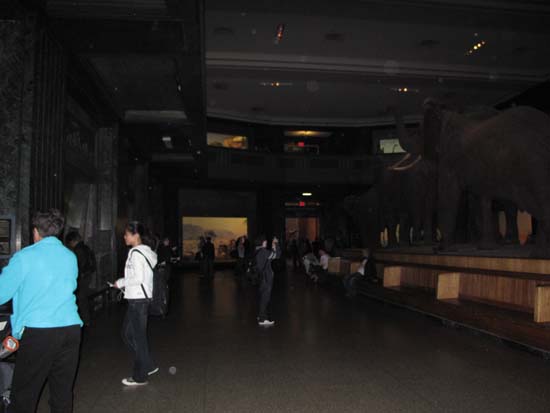
I came into AMNH through the Central Park West entrance. Naturally, the first exhibit I entered was the one with the large elephants and old school dioramas of animals from various regions.
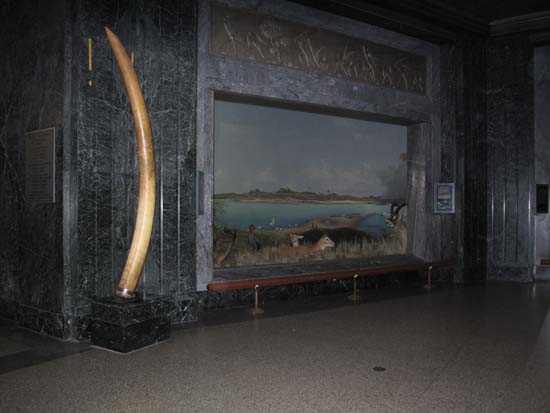
The room is dark and the dioramas are lit window displays of stuffed animals in artfully recreated original habitats. Looking around the room, I noticed a few groups of adults, some couples, and many children – ranging from grade school age to teenage years. I didn’t really see any security guards. I saw some young children hopping around on the benches under the elephants and one boy attempting to climb one of the giant tusks near the doorway until his father gently pulled him off.
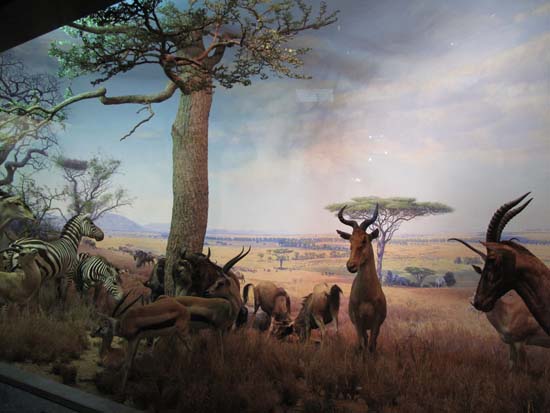
That room manages a strange mix of playful, creepy and inexplicable. I think the playful element comes through the constant influx of children bouncing around the room. The creepiness comes from the idea that you are looking at real stuffed animals in the dark which is also akin to the creepiness experienced in a wax museum. And the inexplicable is the odd 3 dimensional capture of actions frozen in time, in some ways more real than a photograph, but also quite frankly – more dead.
Like the Metropolitan Museum, Natural History is relatively massive. One could spend several hours visiting just a few of the exhibits. What’s interesting is the contrasting feel of exhibits as well as the random places some “exhibits” seem to be placed. For example – I walked through a hallway between two main exhibitions where there were displays of different kinds of rodents, from a field mouse to a beaver. It seemed like their display was created as an afterthought. The rodents were simply tacked up in size order, their bellies against the wall, limbs spread out flat. It was the opposite of the dioramas where the animals were displayed in more natural poses.
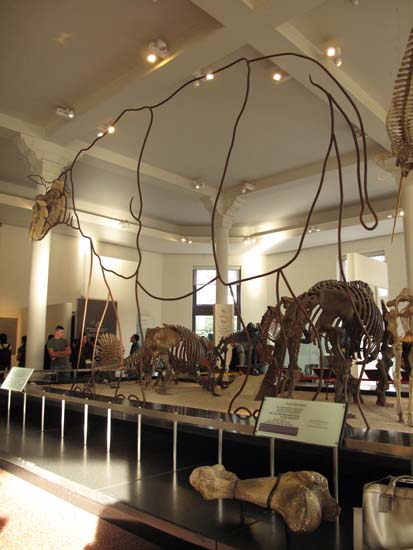
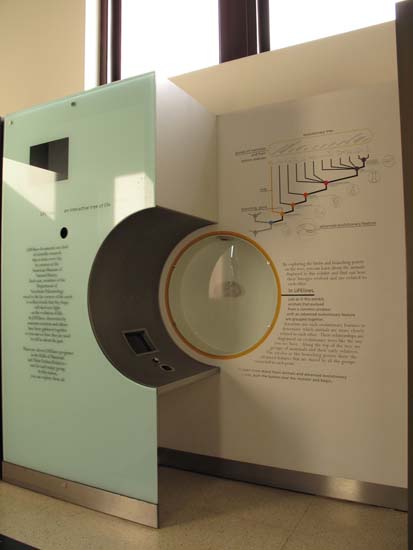
The Hall of Human Origins was more dynamic with a mix of displays – from diorama to video, but I couldn’t help but think of Planet of the Apes. By contrast, the Fossil Halls were bright and had exposed windows to the outside. There were a handful of interactive kiosks, all made the same. One was turned off and another wasn’t working properly. The ones that did work had two screens, an interactive one inside the kiosk and a video display one outside. However, their placements (off to the sides and in corners) as well as the little interest they garnered from the museum goers in the room at that moment – made me think they weren’t that central to the exhibit. They did however seem to make good hiding places which is what some children were using them for.
I found the website well organized considering the large amount of info available on there. I was impressed that it took me only one click to find the address, hours and admission price all in one page. My previous experiences with other museum websites has been that this is not always the case.
It’s hard to give an overall critique of the museum simply because it’s so huge. What comes across to me is that it is a large old museum that is in the process of finding new and innovative ways to exhibit and the transitions are visible. For example, even though creating dioramas seem to be a lost art and to some, a rather archaic way of displaying “artifacts”, I feel they still garner a perspective not gained through other means. And essentially that is what I feel is possibly the most important aspect of a museum’s physical publicly accessible existence. It gives an experience that is not completely translatable through a book or just a video or only navigating through a website. I believe the information you’re fed, the background, all the words that may surround an exhibit, are all there to help generate a feeling in you. Whether or not it educates you by informing you in the traditional sense or attaching those words to your memory is secondary and if successful, simply a by-product.
