
Cabinets of Wonder: Old vs New: Tenement Musuem, Cooper-Hewitt
Tenement Museum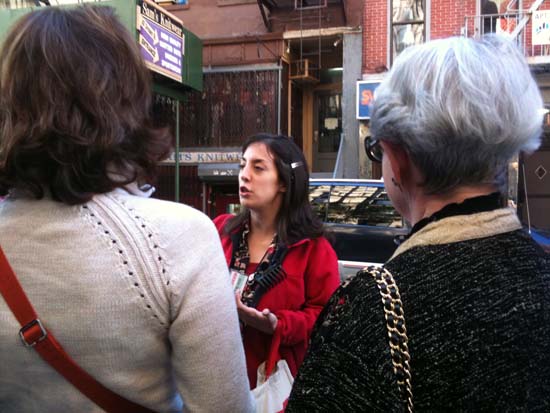
The Tenement Museum lobby is also their gift shop and admissions desk. You can only view the tenement museum through their guided tours which are scheduled, limited to a certain number and specific to a theme. The person who was behind the admissions register was also the person announcing when the next tours would be meeting outside. Once you meet outside, you’re greeted by your tour guide – who call themselves the “Educators” and you find that the actual museum is a tenement building across the street.
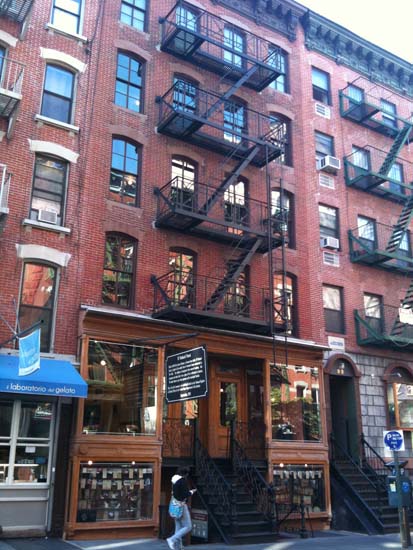
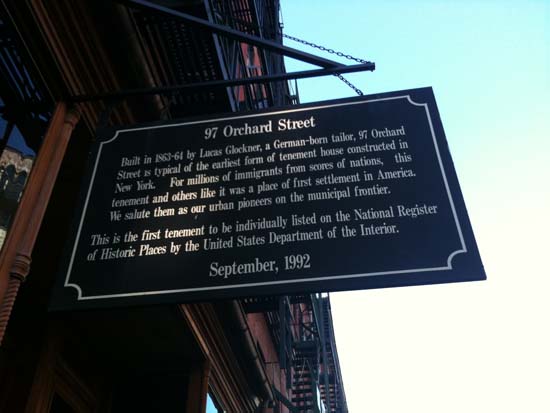
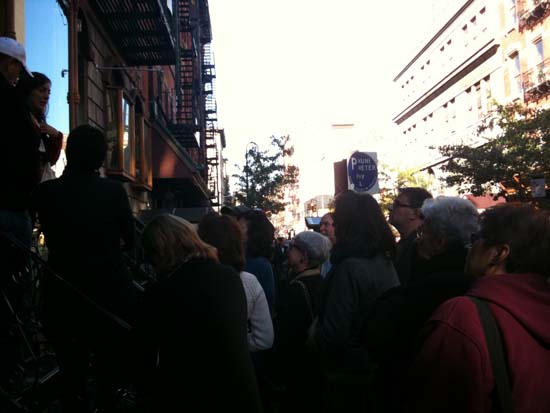
The first thing I noticed about my group was that I was the only non-white looking person as well as the only one possibly younger than 55 years of age. I had also found that I was the only visibly non-white person in the lobby/admissions/gift shop upon entering, though the age range seemed to be greater in there. The reason for the guided tour is to lead you through the actual tenement. The exhibits are not behind glass or roped off. You’re in the exhibits themselves. I really liked this idea.
Even before we made it to the building, the guide carried a folder with laminated papers and photos. She would pull one out telling the story behind each item and subsequently linking it to the space we were inhabiting at that moment. Following her facts and some Q&A, she’d give us a few seconds and whoosh us into the next room. The detailing and intricacy of the homes really made me want to stay longer and peer into everything and I wished we had more time in the room beyond the guide’s presentation.
The three different tours overlap in schedule, so as you walk up some stairs or down a hall, another group can sometimes squeeze through yours (or vice versa). Definitely a good illustration of how small and crowded tenements would get back in the day.
The end of the tour brings you out a back outdoor stairwell that was built specifically for the museum. The stairwell is metal, modern and sturdy – unlike the tenement itself. When you round the corner to head back to the gift shop/admissions/museum bathroom – you pass a corner building that has a sign saying it will be another part of the tenement museum.
I enjoyed the experience, even though I did have itchings to wander about myself. But the stories, history and insights the guide/educator gave enriched the museum going experience in a different way than if I was to go off on my own and stare at every last thing throughout each room.
Cooper-Hewitt
I found the Cooper-Hewitt a little lackluster. I went through a bit of the Design USA – Contemporary Innovation show on the first floor before I decided try out the iTouch they were making available for free to accompany that particular exhibit. Because so many of the pieces were products and displayed on open shelves, it did feel a bit like shopping. The iTouch had recordings of most of the designers featured. I was excited at first to hear them, but found that even though it was interesting to hear their voices and see some additional photos (really small – iPod screen-size), it still wasn’t much of an enhanced experience. In retrospect, I felt like I was spending too much time flipping through the list and trying to look at the small photos than I was looking at the actual exhibit pieces in front of me.
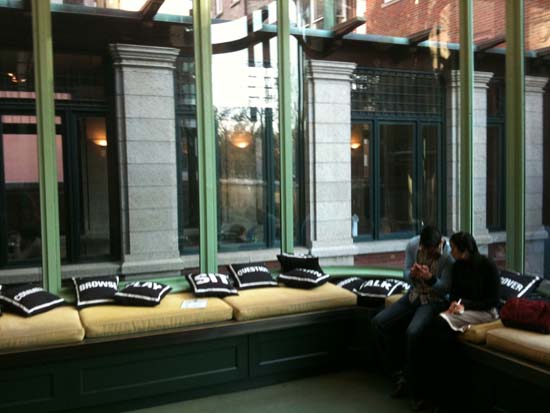
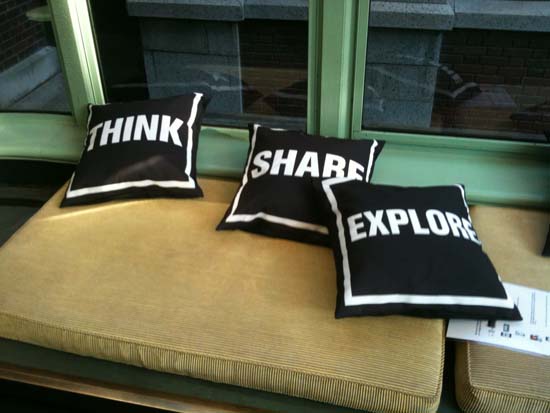
Midway through was the lounge room with surrounding windows and pillows that looked like push buttons. It was nice to be in a room where you could actually touch and relax near something that may have been a part of the exhibit. I think they were, but not entirely sure.
The Design for a Living World exhibit upstairs did not utilize the iTouch. Each exhibit had a video with the commissioned designer being interviewed about their discovery and process. The materials they had worked with and iterations of their transformation were displayed in glass covered cases. A map and some info about the region of the origin of the chosen raw materials were printed out onto metal sheets and hung on the walls.
I have to say – for a design museum, their art of display was lacking. I suppose being housed in a rather old landmarked building can impose some restrictions to design & exhibit construction, but still – doesn’t provide a platform for interesting exhibit design innovations?
