
WEEK 3, DAY 21
I feel like I’ve just had the recipe for getting to sleep ASAP. It includes an early morning, day of stuff, beer before a meal, and a filling dinner. Add a dimly lit room and voila! Instant sleepiness!
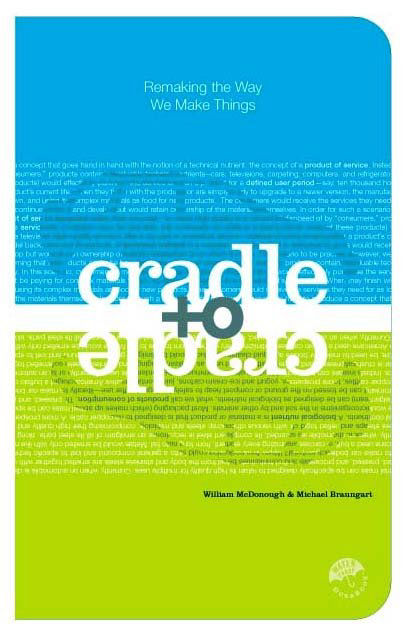
I received the Tisch Alute notice today in the mail and the card colors are more or similar to the cover of the Cradle to Cradle book, but bolder.
Today, I also ate some yogurt and found this under its lid:
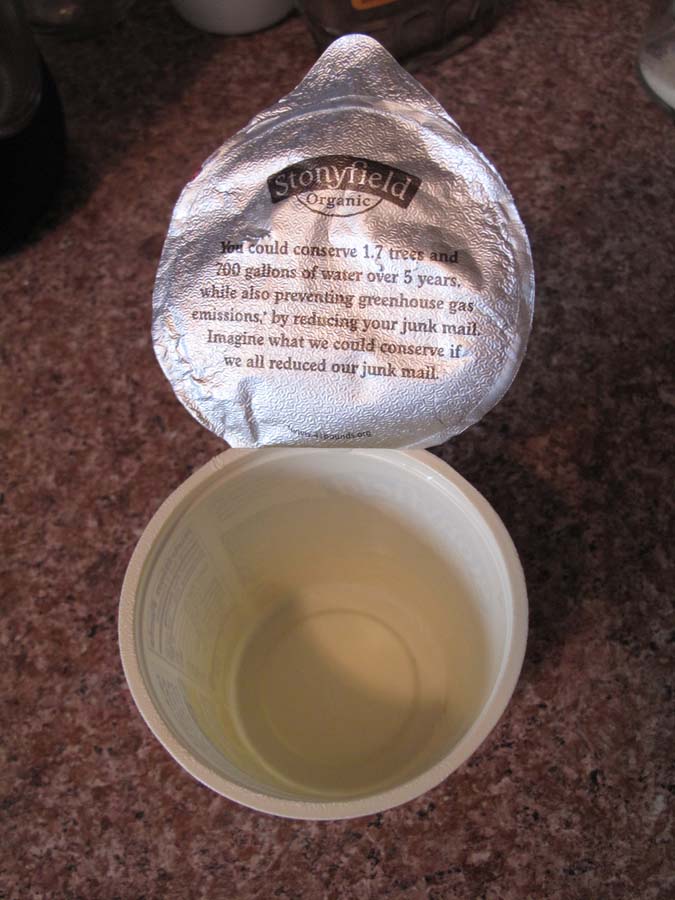
The idea of reducing junk mail and al the paper manufactured along with it is a great task. But this makes me think of SPAM and electronic junk mail – and I wonder just how much SPAM is actually circulated. What percentage of email is straight up junk? And how much data storage does all that SPAM take up in data centers around the world?
For my final last year in the Sustainability/If Products Could Tell their Stories class – I found a 2007 Environmental Protection Agency report (http://www.energystar.gov/index.cfm?c=prod_development.server_efficiency_study) that stated in 2006, data centers consumed 1.5% of the total electricity used in the U.S. – or I 61 billion kilowatt hours. When this study was published, it was estimated that those numbers would double by 2011 and 10 additional power plants would be needed – if the energy consumption continued on the same track.
Since then, many companies have started to make/build “energy efficient” data centers – such as Google . But even then, I don’t know what kind of follow-up has happened via the EPA or other organizations, nor do I have a clue what those numbers are today in 2010. Energy efficiency is addressed in the Cradle to Cradle book and essentially they say “efficiency” is not enough and should really be replaced with “effectiveness”.
Going from paper junk mail to virtual junk mail and the data centers that store all the virtual and electronic-ness – prompts me to question how much energy “cloud computing” currently consumes. As the cloud grows (just as gmail’s storage capacity grows infinitely bit by bit) and the need for space increases, how many more data centers will pop up in the next 3-5 years? And with them, how many more power plants? The next question after that is – what kind of power plants?
I also just found this article from a few days ago about Facebook building their first data center in Prineville, OR – and this related blog post by Jonathan Heiliger of Facebook.
Some food for thought.
